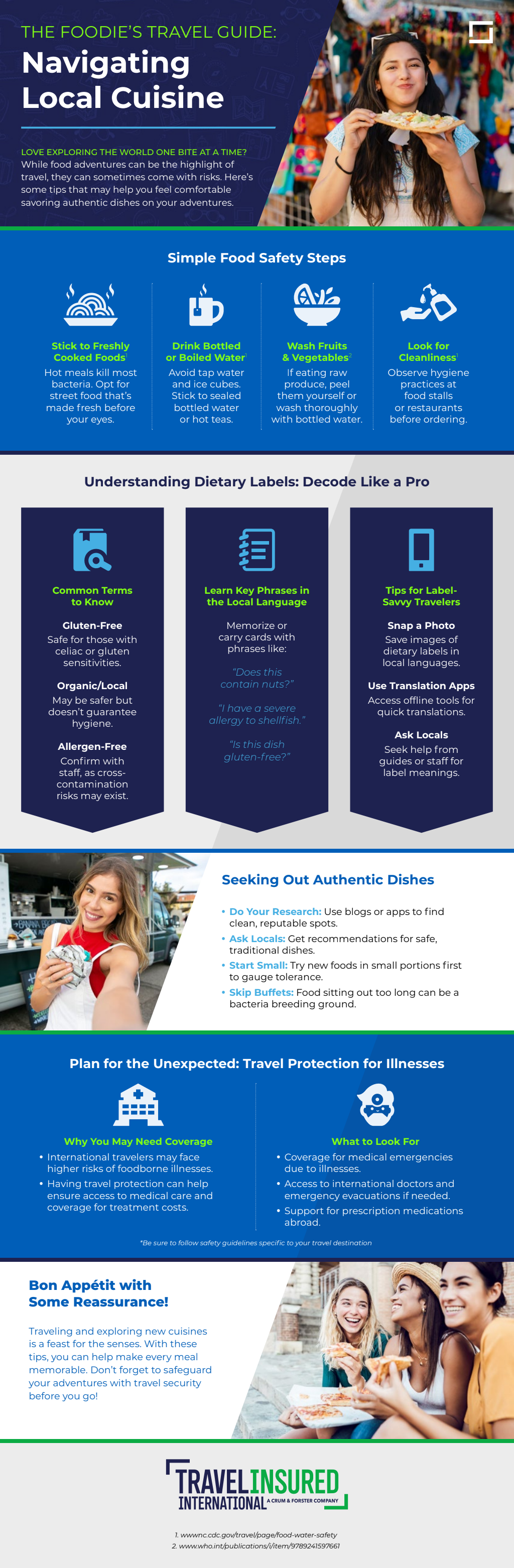
Traveling is as much about exploring flavors as it is about discovering cultures. From bustling street markets in Bangkok to Michelin-starred restaurants in Paris, every dish tells a story. Indulging in local cuisine, however, requires moderate caution to ensure your culinary adventures remain enjoyable. Beyond avoiding food poisoning and understanding dietary labels, there are other aspects of dining abroad that are essential for travelers to know.
Dining Etiquette and Cultural Norms
Understanding local dining customs can enhance your experience and help you avoid awkward situations. In Japan, slurping noodles is a sign of appreciation, while in Thailand, using a fork to eat rice is considered impolite. Researching cultural norms beforehand not only shows respect but can also give you insights into how food is prepared and served, which can influence its safety.
Navigating Food Markets
Food markets are often the heart of a destination’s culinary scene, offering fresh and authentic options. While they are a must-visit, they can also pose risks if you’re not careful. Stick to vendors with long lines — locals usually know the safest spots. Pay attention to how food is stored, as poor refrigeration can lead to contamination. Avoid raw seafood or meats unless you’re in a region known for safely handling them, such as Japan or Iceland.
All-Inclusive Resorts and Food Buffets
While resorts often advertise high safety standards, food poisoning can still occur. For example, buffets can be prone to issues such as cross-contamination or food left at unsafe temperatures. Stick to freshly prepared options and avoid items that look like they’ve been sitting out for too long.
Building Immunity Before Travel
Boosting your immune system can minimize the impact of minor foodborne illnesses. Probiotics, for example, can help build a resilient gut. Consult with your healthcare provider about taking probiotics or a traveler’s health kit, which may include antidiarrheal medication and rehydration salts.
The Importance of Food-Related Insurance
Foodborne illnesses can derail your trip and lead to costly medical expenses abroad. Travel insurance plans that cover food-related emergencies can provide peace of mind. This often includes access to international medical care and coverage for treatments related to food poisoning. Always check your policy for specifics before traveling.
Traveling for food is one of life’s greatest joys, but preparation and caution are key to ensuring every bite is a delight. By understanding cultural nuances, making smart choices at markets and protecting yourself with the right insurance, you can fully embrace the world’s culinary diversity.
To learn more about how to safely navigate local cuisine, see the accompanying resource from Travel Insured International, a provider of trip interruption insurance.